2 posts tagged with "OpenFeature"

View All Tags

Feature Flags Behind a Proxy: HTTP Proxy vs ConfigCat Proxy

· 12 min read

Zoltan David
One with a vision, answers and a master plan.
Eszter Valentinyi-Harmath
Marketing in the heart, front-end in the mind, Nutella in the veins.

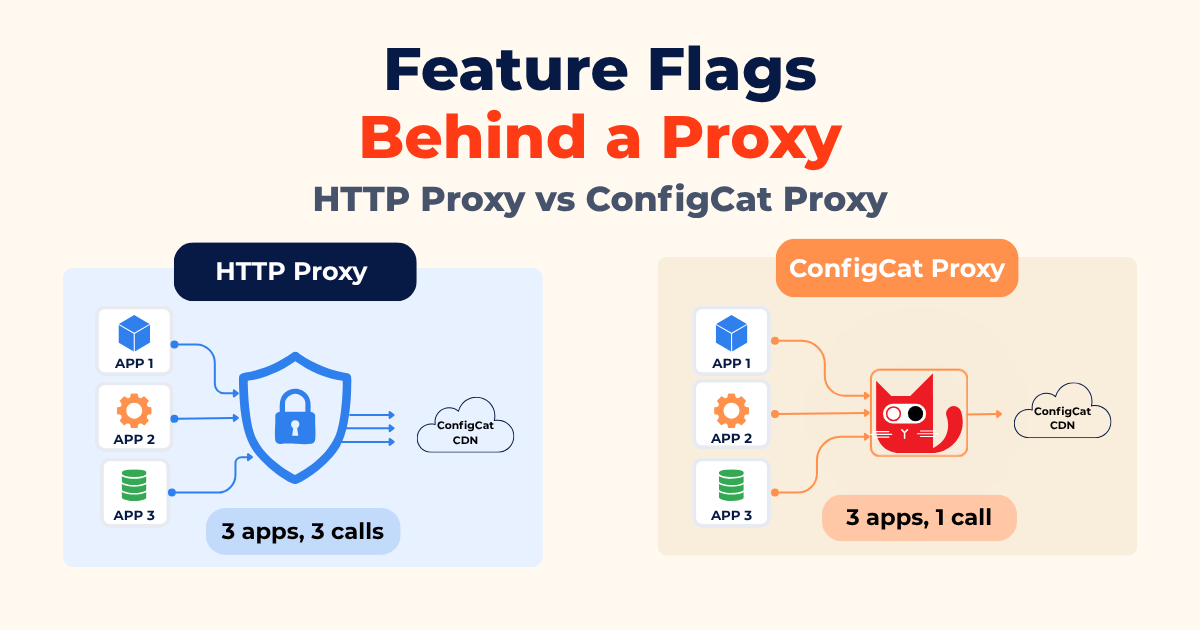
Feature flags need a way to receive configuration updates. In many setups, that means an outbound connection, but restricted networks can make that impossible.

If your backend sits behind a corporate proxy, outbound requests may need to pass through an authenticated gateway. In a locked-down VPC or air-gapped environment, direct internet access may be restricted or unavailable entirely. When the SDK cannot retrieve a usable configuration, it may continue using the last cached version or fall back to configured default values. Either way, the "flip a switch" experience starts looking a lot less dynamic.
ConfigCat proxy cover image

OpenFeature with ConfigCat: Feature Flags Without Vendor Lock-In

· 13 min read
Zayyad Muhammad Sani
You live, you learn.
Chavez Harris
Build. Break. Learn. Repeat.

Feature flags help teams release software with more control. You can roll out features gradually, target specific users, run safer production releases, and turn risky functionality off without redeploying your application.

But once feature flags become part of your release workflow, another question comes up: should your application code depend directly on one feature flag vendor's SDK?

That is where OpenFeature can help.

In this guide, we'll look at what OpenFeature is, how it works with ConfigCat, and how to use the ConfigCat OpenFeature Provider for Node.js in a simple Express API.

OpenFeature with ConfigCat: Feature Flags Without Vendor Lock-In Cover