2 posts tagged with "caching"

View All Tags

Feature Flags Behind a Proxy: HTTP Proxy vs ConfigCat Proxy

· 12 min read

Zoltan David
One with a vision, answers and a master plan.
Eszter Valentinyi-Harmath
Marketing in the heart, front-end in the mind, Nutella in the veins.

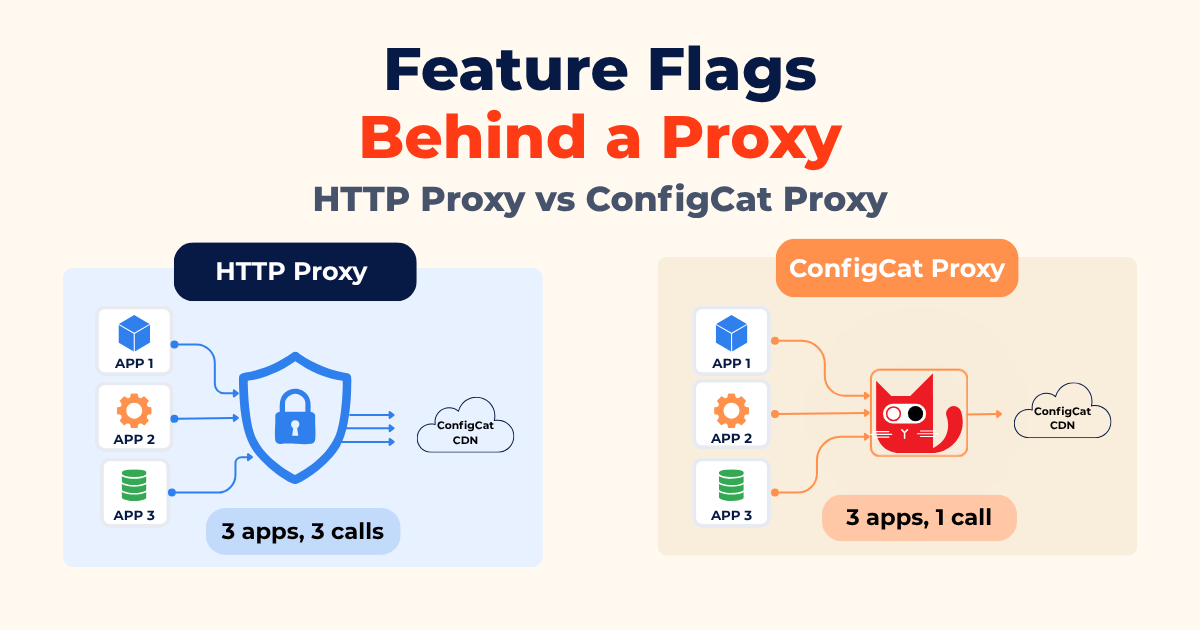
Feature flags need a way to receive configuration updates. In many setups, that means an outbound connection, but restricted networks can make that impossible.

If your backend sits behind a corporate proxy, outbound requests may need to pass through an authenticated gateway. In a locked-down VPC or air-gapped environment, direct internet access may be restricted or unavailable entirely. When the SDK cannot retrieve a usable configuration, it may continue using the last cached version or fall back to configured default values. Either way, the "flip a switch" experience starts looking a lot less dynamic.
ConfigCat proxy cover image

How to Use ConfigCat with Redis

· 6 min read
Chavez Harris
Build. Break. Learn. Repeat.

Ever since the dawn of feature releases, feature flags have become the de facto standard for managing and controlling features in software applications. Many software development methodologies these days such as agile, are heavily focused on releasing continuous updates and features. In addition, a few companies have based their entire business around serving clients a cloud-based feature flagging solution. But in limited bandwidth situations or when you need to optimize the performance of your client-facing applications making API requests may not be ideal. This can be handled by implementing a process called caching with the help of a popular tool called Redis.

Feature flags in go cover