31 posts tagged with "progressive delivery"

View All Tags

A/B Testing with Feature Flags: How It Works and When to Use It

· 16 min read

Ibrahem Abukhalil
Everything is understandable.
Csilla Kisfaludi
Tech support by day, movie addict by night, crazy cat lady 24/7.

A feature can work perfectly and still make the product worse. Imagine your team builds a new search-ranking algorithm that performs well in internal tests. Instead of releasing it to everyone, you can use a feature flag to show it to a percentage of users and compare how they behave.

Feature flags control who receives each variation, while your analytics platform measures the outcome. Together, they make it possible to test meaningful product changes, limit risk, and roll out the winning version without another deployment.
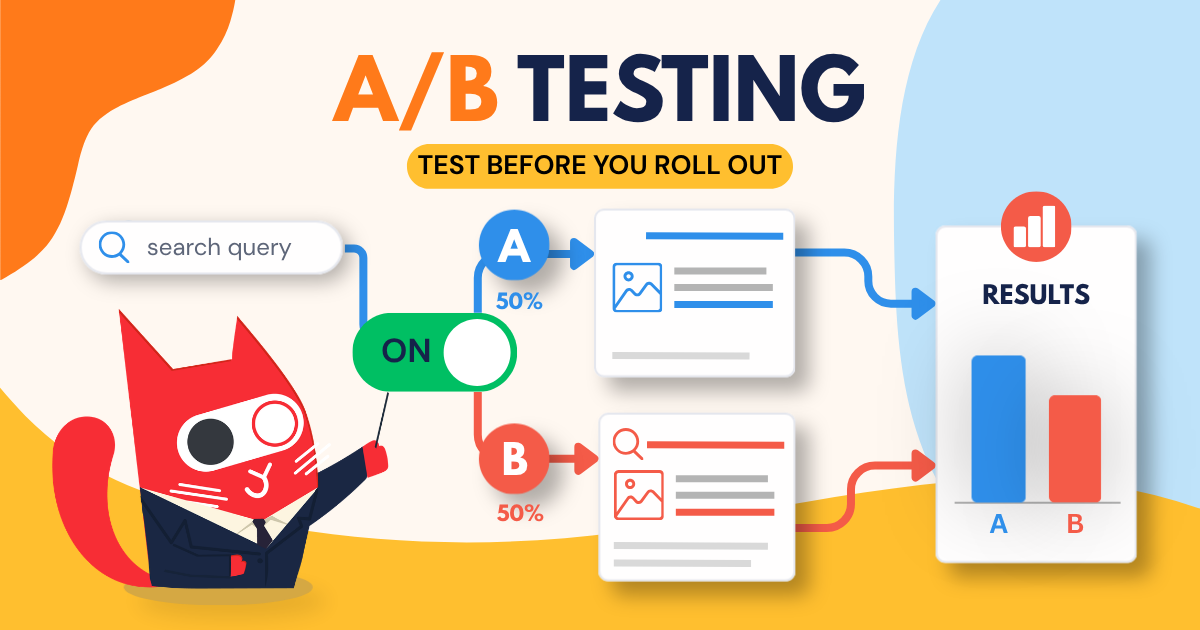

A/B Testing with Feature Flags

Vibe Coding Best Practices: Feature Flags as a Safety Net

· 16 min read
Eszter Valentinyi-Harmath
Marketing in the heart, front-end in the mind, Nutella in the veins.

Vibe coding is genuinely changing how software gets shipped. It's not hard to see why: faster iterations, lower barrier to entry, more time in flow, and less time wrestling with boilerplate.

Production, on the other hand, doesn't care about your flow state.

You've probably been there: a feature that looked clean in every prompt, passed the automated tests, survived a quick review, and got merged without a second thought, only to silently misbehave for a slice of your users hours later. The AI didn't know about the edge case. You didn't catch it. And now you're debugging code you didn't quite write.

This doesn't mean vibe coding is the problem. It means AI-assisted development needs a production safety net. And what is one of the most practical safety nets for production features? Feature flags.

Vibe coding best practices with feature flags as a safety net

Feature Flag Ownership: How Product and Engineering Should Share Control

· 14 min read
Csilla Kisfaludi
Tech support by day, movie addict by night, crazy cat lady 24/7.

Feature flags are one of those tools everyone loves… until it’s time to decide who actually controls them.

Should Engineering keep them because they built the feature? Should Product take over because they’re responsible for launches and customers? Or should both teams share ownership, set some clear rules, and avoid turning every rollout into a small internal debate?

The honest answer is: both Product and Engineering should own feature flags, but not in the same way.

Engineering should own the technical side: implementation, safe defaults, stability, and rollback. Product should own the rollout side: launch timing, user targeting, customer exposure, and experiments.

That sounds simple enough. But in real life, this is where things often get messy. So let’s break it down.

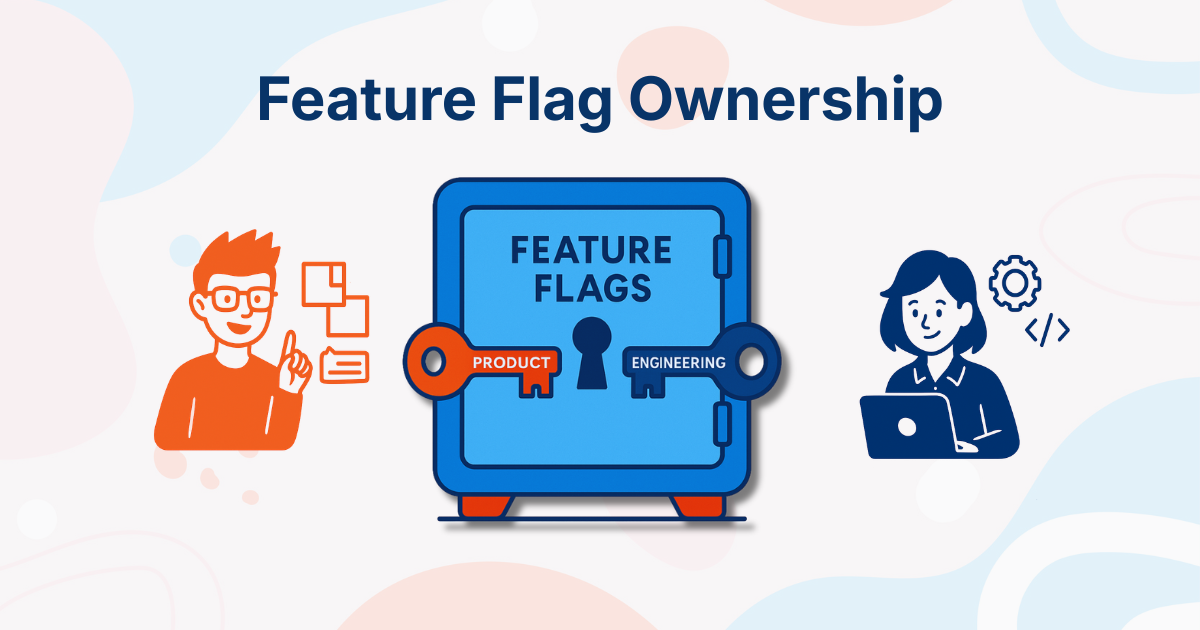
Feature flag ownership cover

Feature Flags Explained: How They Work, Why They Matter

· 21 min read
Csilla Kisfaludi
Tech support by day, movie addict by night, crazy cat lady 24/7.

You’ve probably heard the term feature flag, maybe in a pull request review, a deployment postmortem, or a job description. The concept sounds simple: turn features on and off without redeploying code. But once you start working with them, you realize there’s a lot more to it than a boolean in a config file. They fundamentally change how you ship software.

This guide explains what feature flags actually are, how they work under the hood, when to use them, when not to use them, how to test them properly, how to manage them across teams, and how to avoid the organizational problems that turn a helpful tool into a maintenance burden.

Feature flags explained cover

Canary Releases with Feature Flags: How to Roll Out from 1% to 100%

· 11 min read
David Herbert
Turning deep tech into stories developers actually want to read.
Csilla Kisfaludi
Tech support by day, movie addict by night, crazy cat lady 24/7.

When shipping new features, releasing them to all users at once can be risky. Even small bugs can affect thousands of users immediately. That's why modern teams rely on canary releases and feature flags to roll out changes gradually, monitor real-world performance, and reduce the risk of failure.

In this guide, you'll learn:

  • What a canary release is
  • How it works with feature flags
  • A step-by-step rollout strategy using ConfigCat
  • Best practices and common mistakes to avoid
Canary release cover cover

Chaos Engineering with Feature Flags: Testing Resilience Through Controlled Failures

· 8 min read
David Herbert
Turning deep tech into stories developers actually want to read.

Most teams agree that reliability is learned in production, but the real challenge is learning without affecting the customer experience. After all, even well-designed systems fail in subtle ways: a single slow dependency can cascade into bottlenecks, or an overloaded database connection can push response times beyond what users will tolerate. We can wait for incidents to expose these cracks, or simulate them on our own with the help of feature flags.

Chaos engineering with feature flags offers a more controlled alternative. Instead of waiting for failures to happen, teams can deliberately inject small, realistic faults into production, limit their blast radius, and observe how systems behave under stress without risking a full-scale incident.

In this article, we'll look at how feature flags work, how they fit naturally into chaos engineering practices, and how chaos-enabled feature flags can help test production resilience through controlled failures.

chaos Engineering with Feature Flags

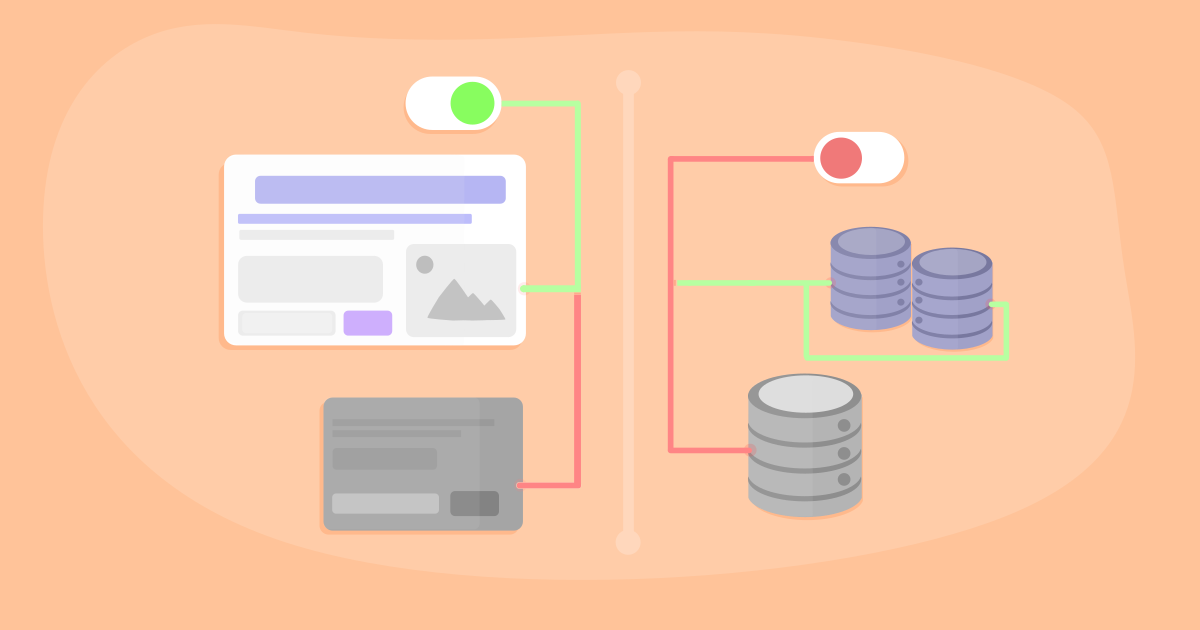
Frontend Feature Flags vs Backend Feature Flags

· 8 min read
Zayyad Muhammad Sani
You live, you learn.

Does it matter whether you evaluate feature flags on the backend or the frontend? The answer is yes. As you might have guessed, the frontend and backend are distinct components of software architecture—and the factors we consider when working with them, such as security and control, apply to feature flags as well.

In this article, we'll explore the pros and cons of backend and frontend feature flags and solutions to challenges you may face while working with them.

Frontend vs Backend feature flags cover

Optimizing Blue/Green and Ring Deployments with Feature Flags

· 8 min read
Roxana Halați
I'm pretty cool, but I cry a lot.

In software development, engineers and operations teams have a variety of deployment techniques, each with pros and cons. With so many options available, choosing the right release strategy can be challenging, especially when addressing specific problems.

In this blog, we will focus on two deployment strategies, blue/green and ring deployments, which aim to deploy software with minimal risk and disruptions, each using a different approach. These strategies can be applied to a variety of scenarios.

Coming up, we will explore how they work, their ideal use cases, their advantages and disadvantages, and, most importantly, how using a feature flag service like ConfigCat can enhance the flexibility and suitability of both blue/green and ring deployments to meet your specific needs.

Blue/Green and Ring Deployment Cover Photo

Managing Feature Flags in Large-Scale Applications

· 9 min read
David Herbert
Turning deep tech into stories developers actually want to read.

Large-scale applications are extensive software applications engineered to handle vast amounts of data, a high number of concurrent users, and complex transactions. They often encompass distributed systems, utilize microservices architecture, and are deployed across various platforms and environments. However, managing large-scale applications presents a unique set of challenges akin to orchestrating a symphony. Like a musical note, each line of code plays a critical role in their grand performance.

Managing feature flags in large-scale applications cover